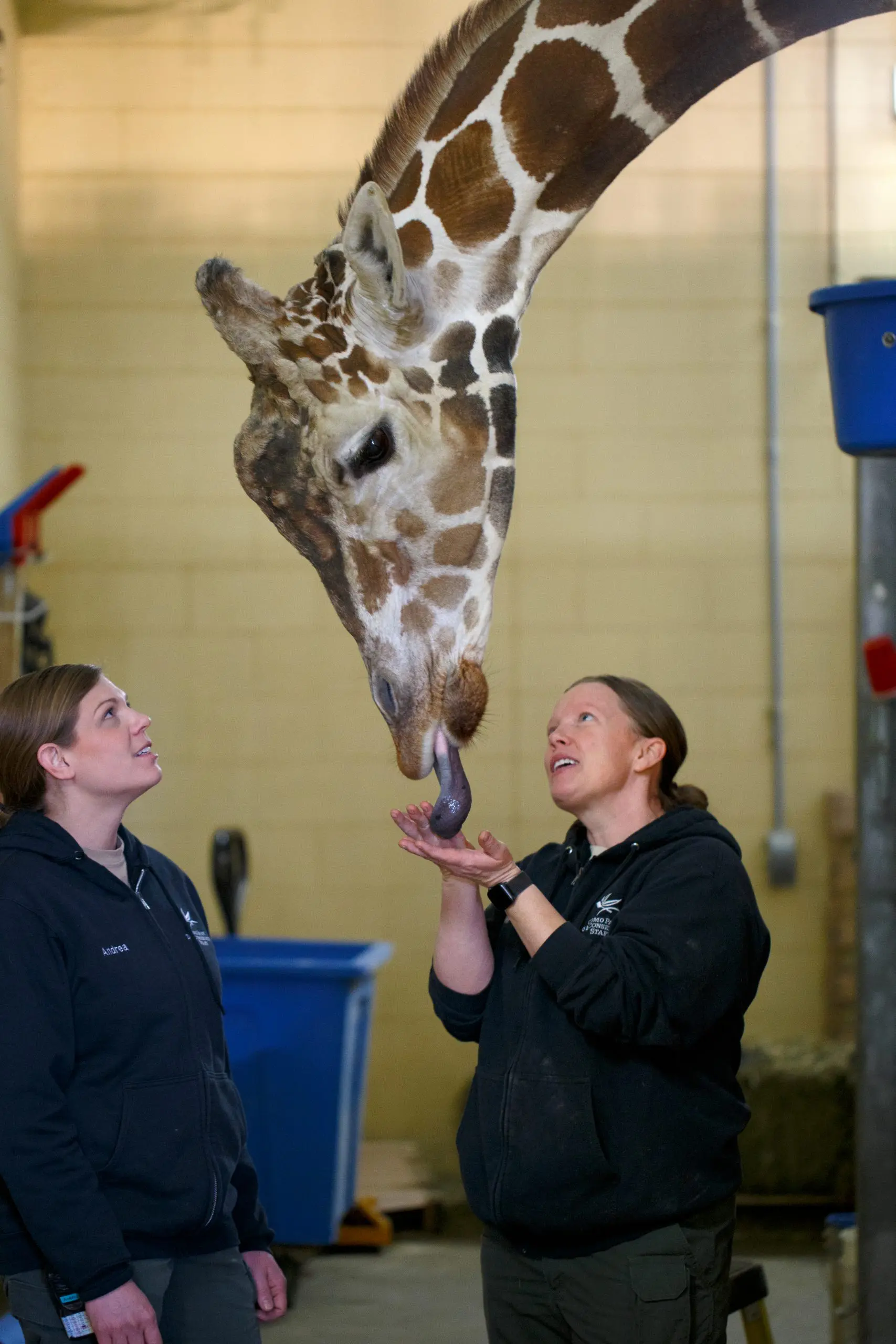
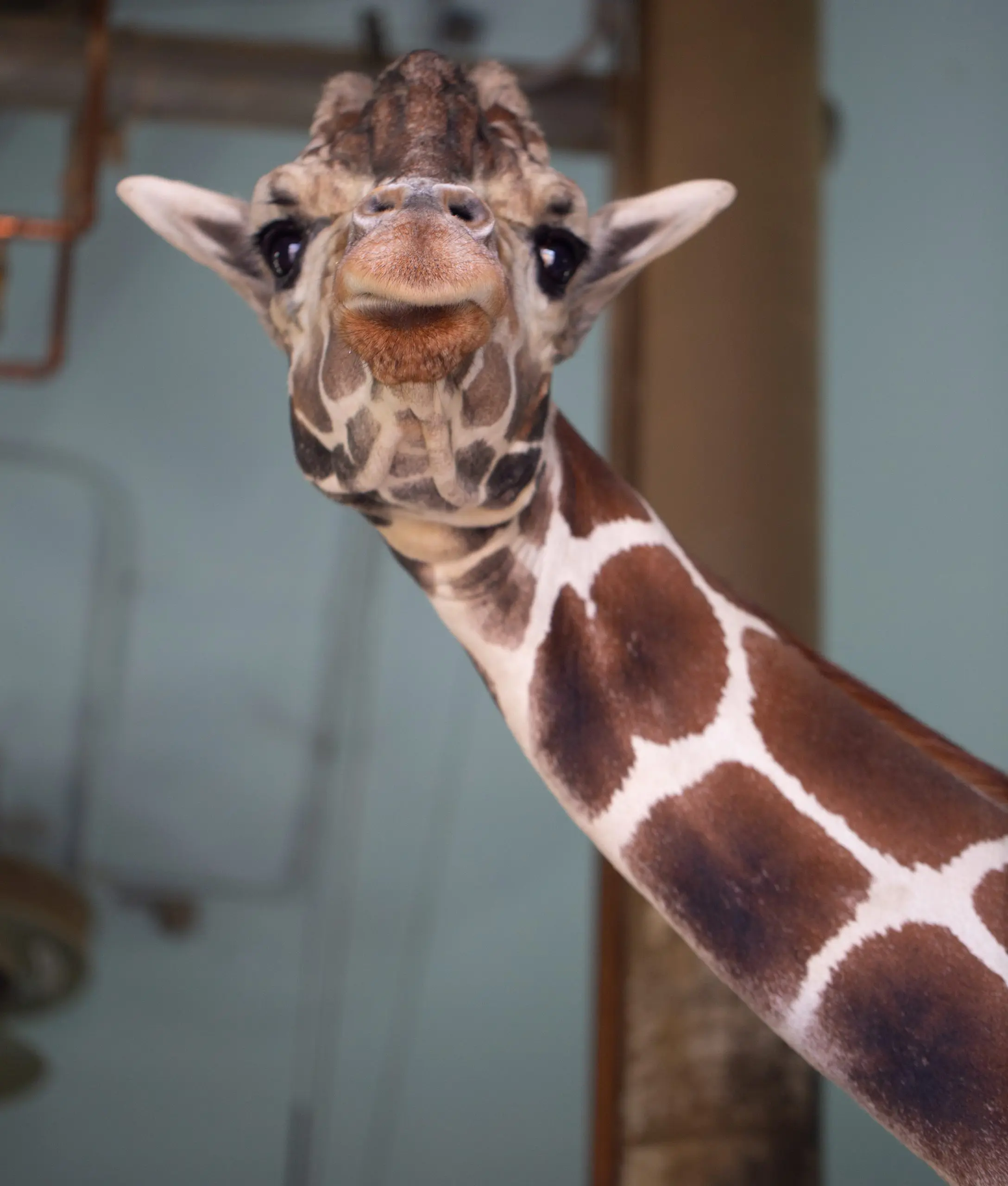
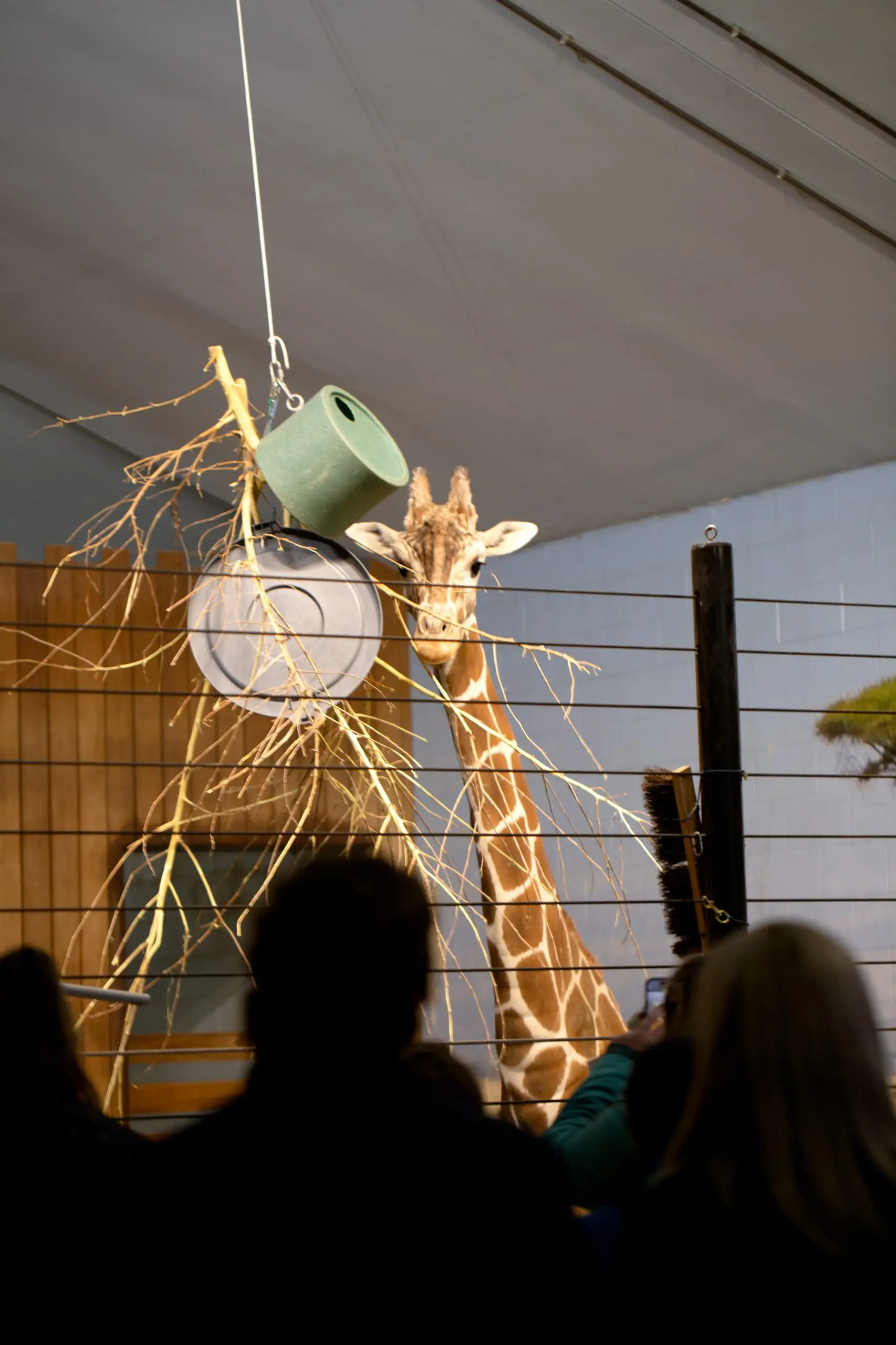
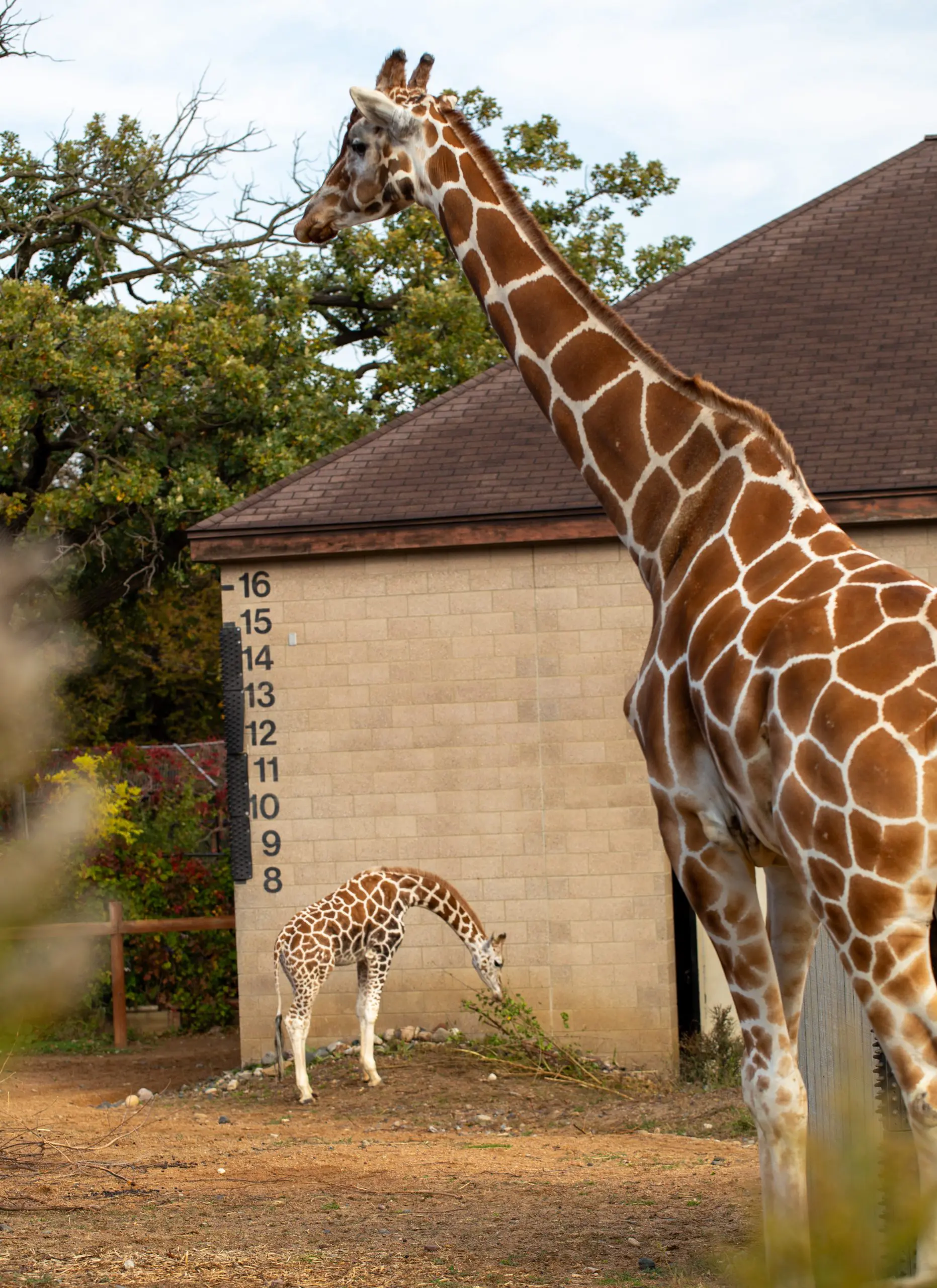
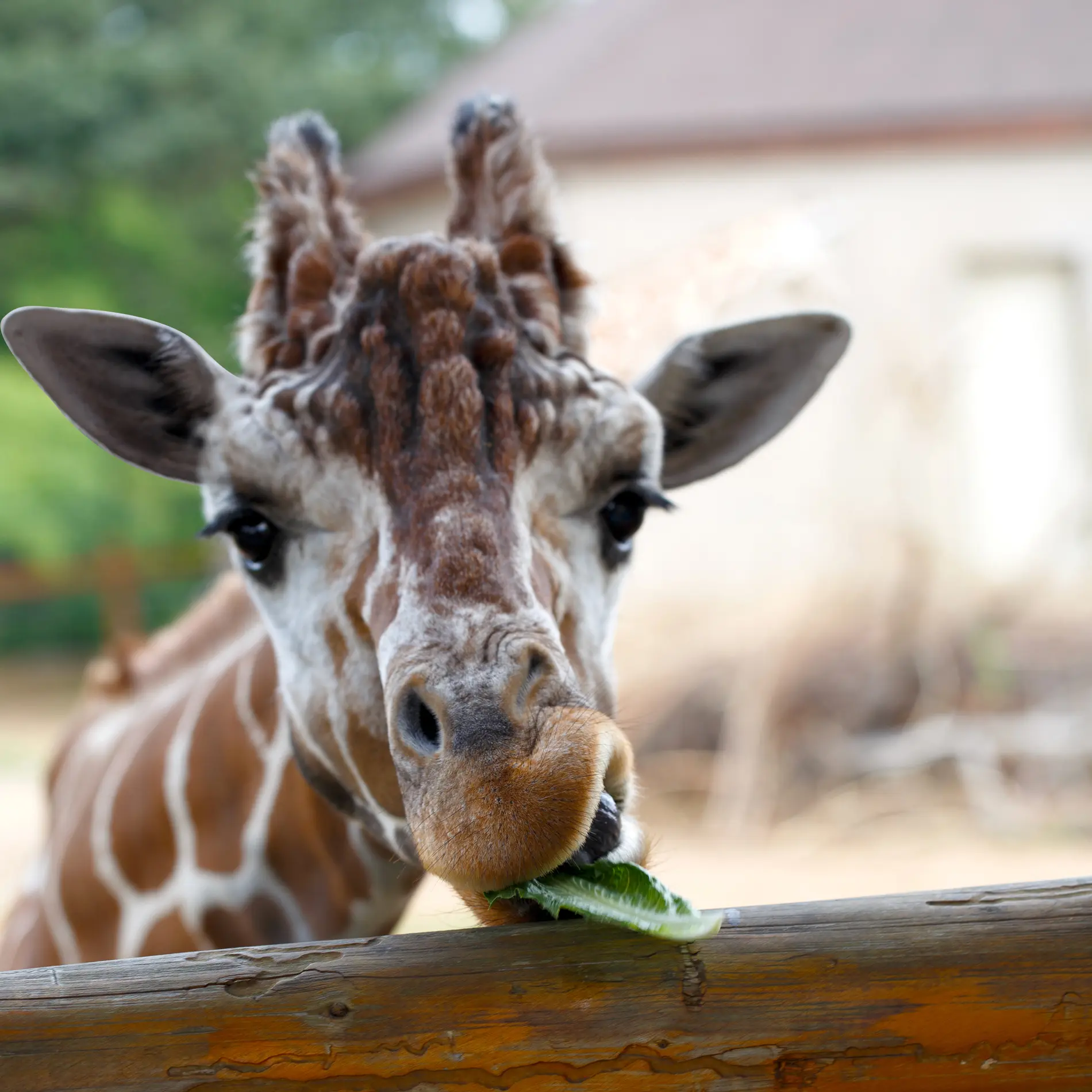
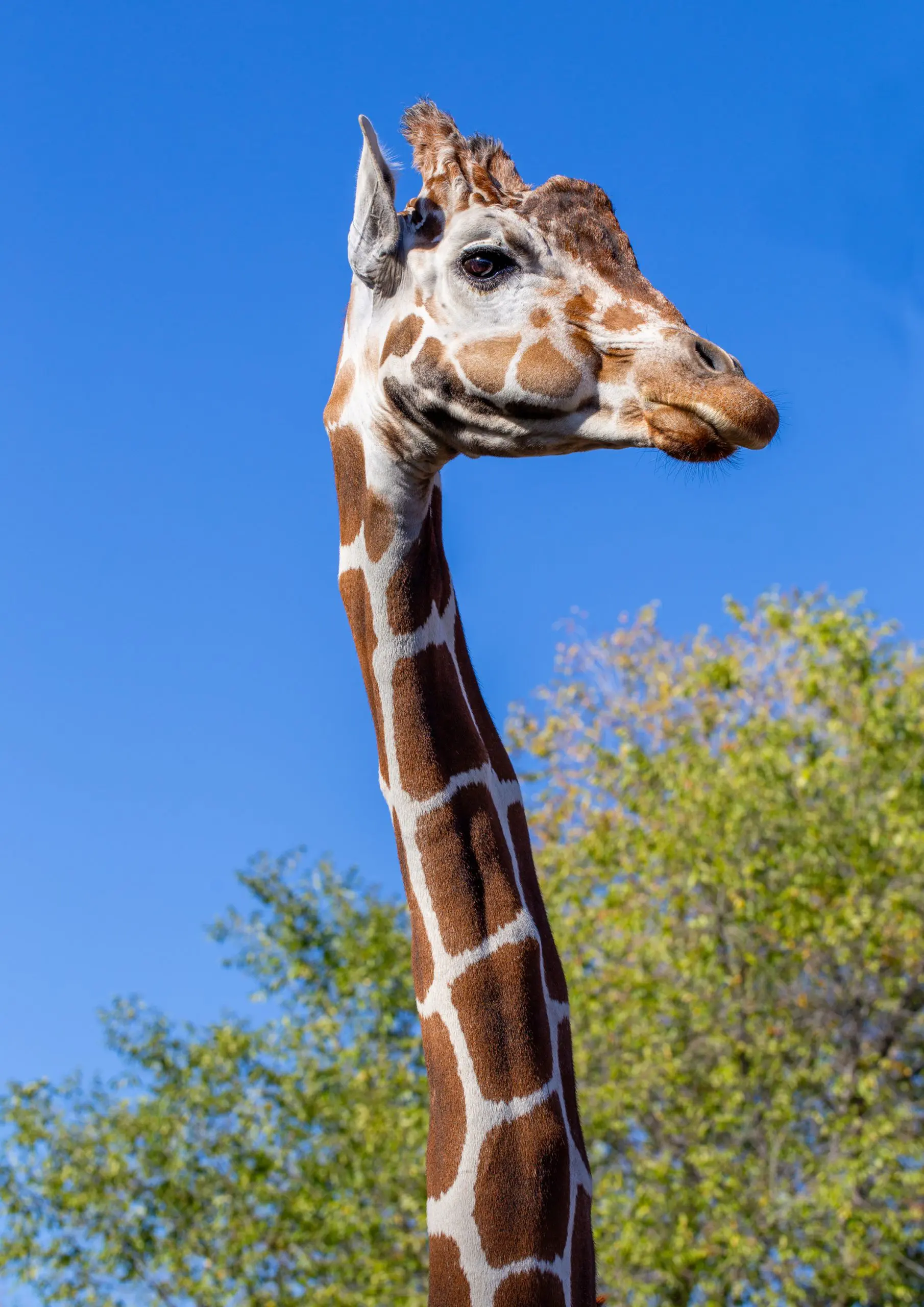
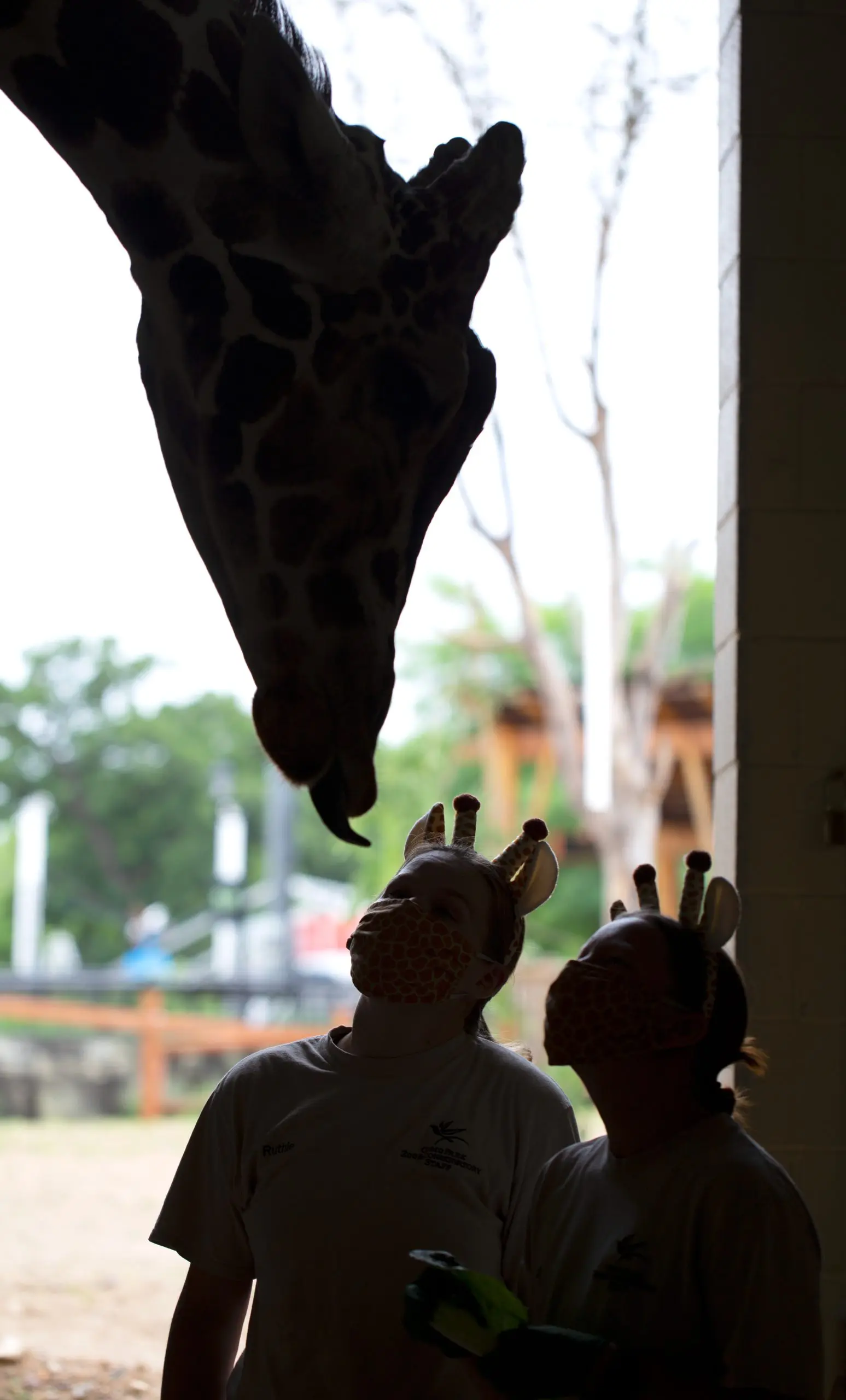
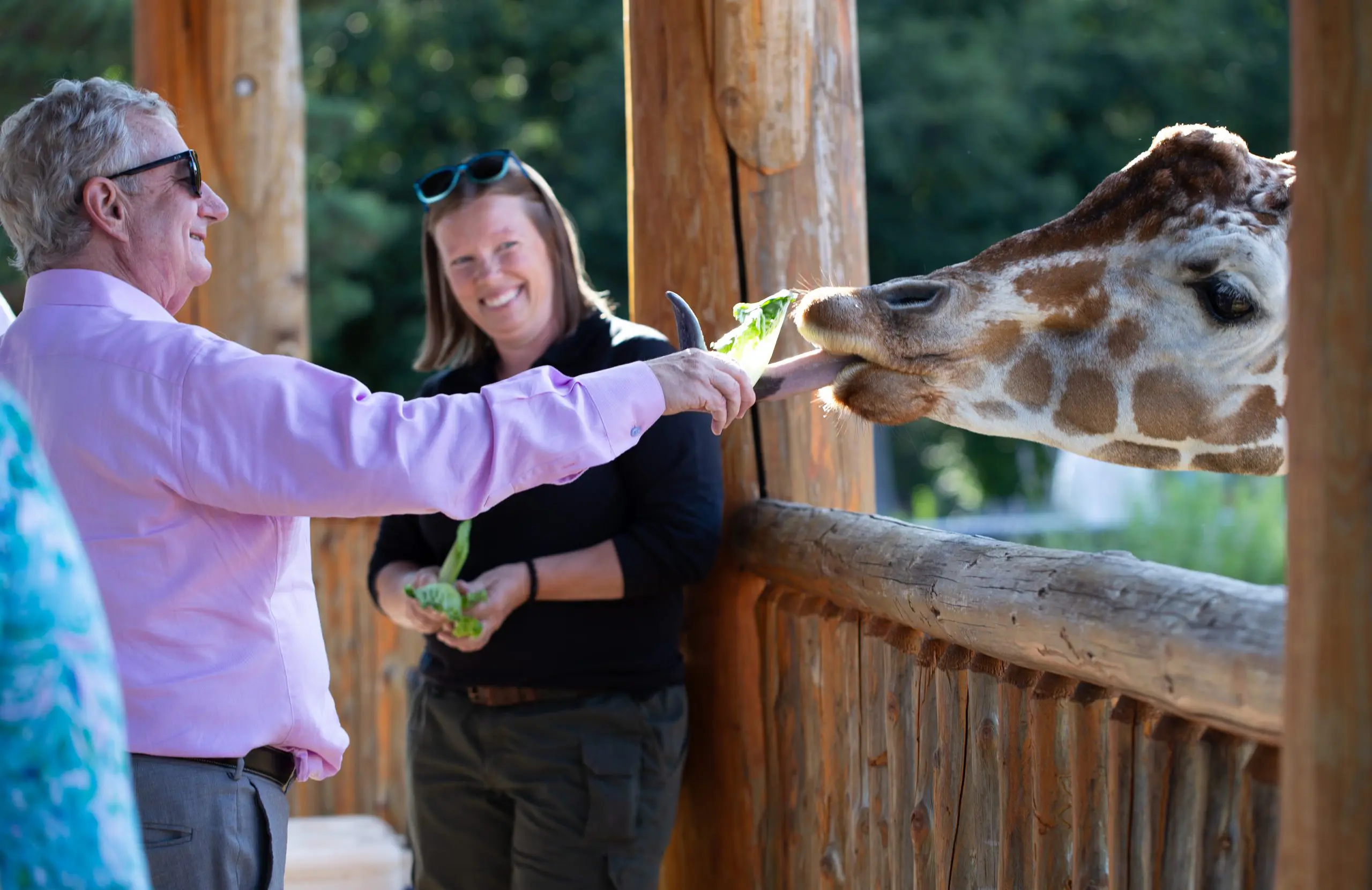
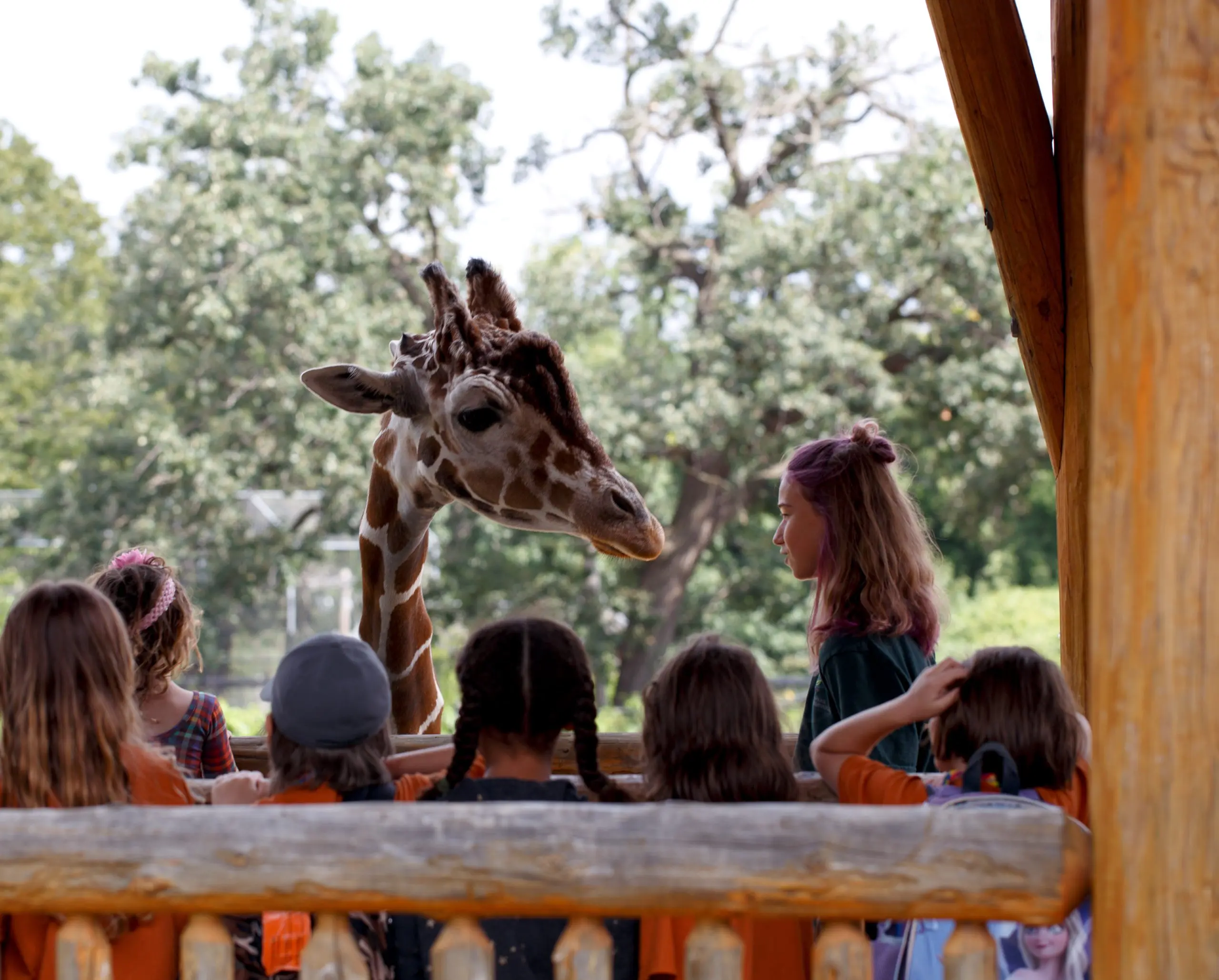
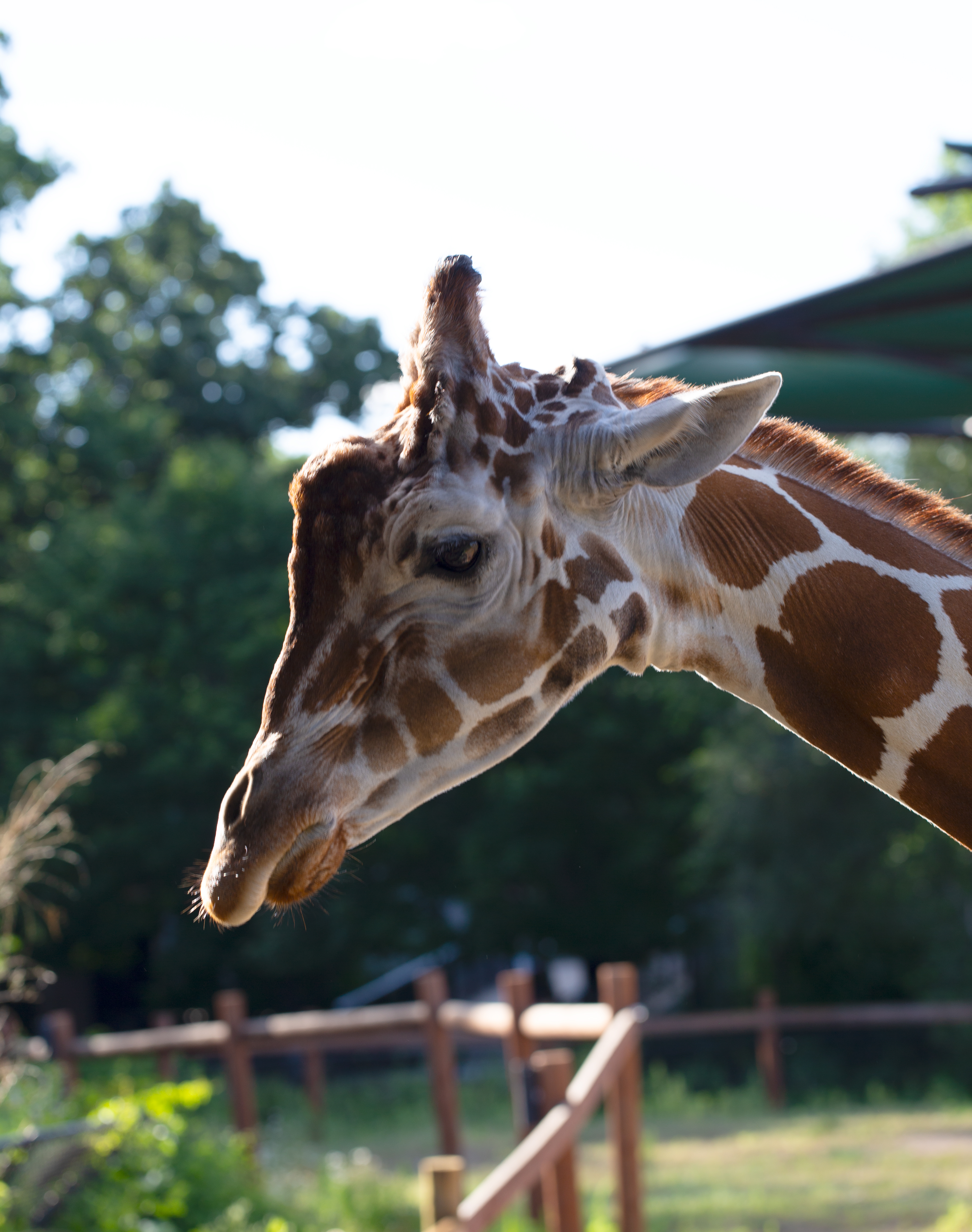
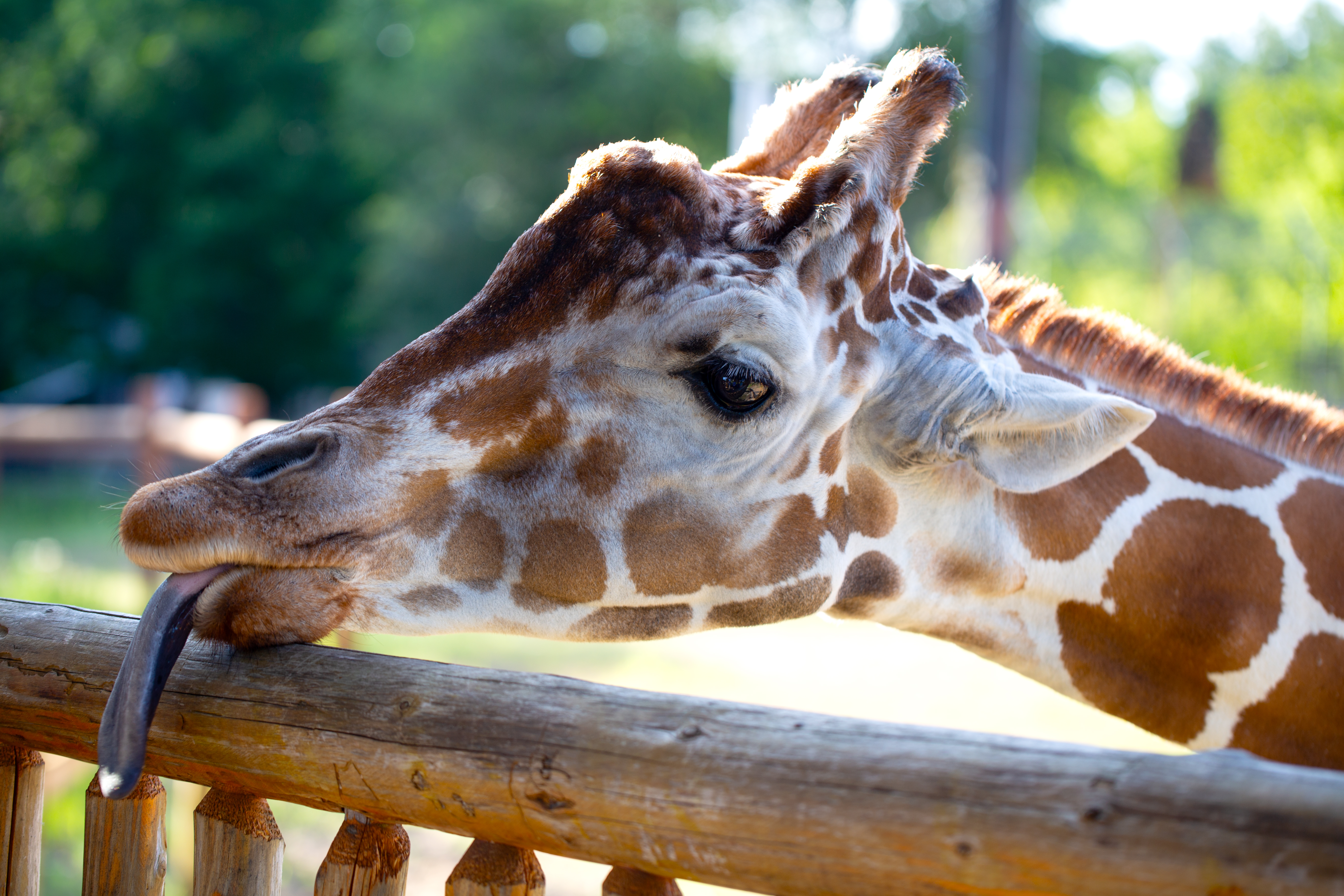
A familiar face to millions of visitors during his 16 years at Como Zoo, Skeeter the reticulated giraffe helped connect Como’s public to one of the most extraordinary species on earth. Standing at more than 16 feet tall, the 17-year-old male was the literal high-point of many Como visits over the years, as guests captured images of their kids feeding Skeeter crispy romaine lettuce at the Giraffe Feeding Station every summer, proposed marriage while he watched, and marveled at the experience of being in close contact with the tallest land mammal on the planet.
“Skeeter was an absolute legend, “ says Como Friends’ President Katie Hill. “You couldn’t ask for an animal ambassador more capable of reflecting the strength, intelligence, sensitivity, and majesty of this amazing species. Visitors knew him by name, of course, but Como Zoo’s keepers viewed him as a member of the family. Our whole campus community is deeply saddened by his loss.”
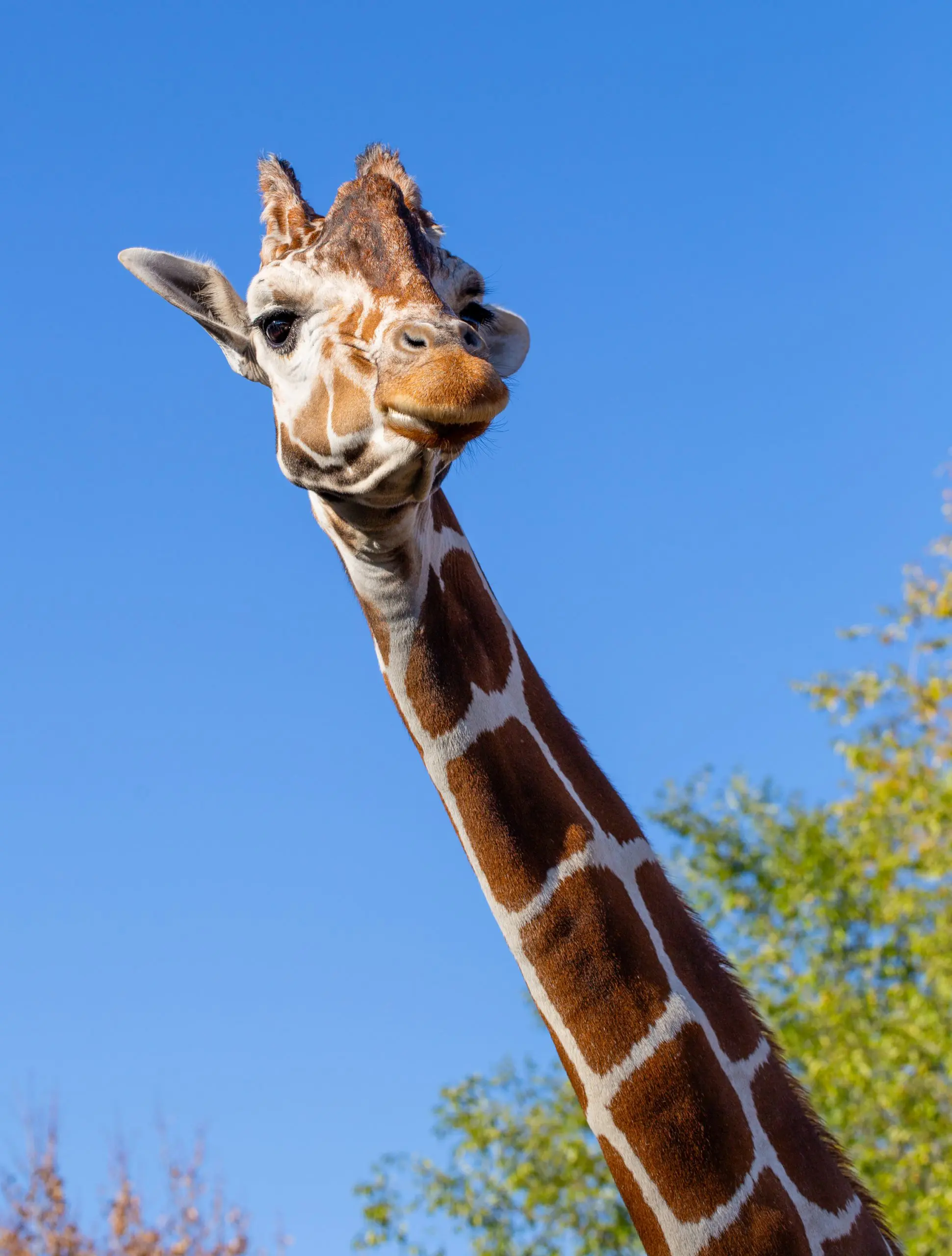
Skeeter suffered from arthritis in his joints, a condition that had severely limited his mobility, while making it difficult for him to lie down and rest comfortably. While keepers had been monitoring his condition for months, Skeeter’s diminishing quality of life led his caregiving team to choose euthanasia as the most compassionate choice for the gentle and gregarious animal that Como Zoo Senior Keeper Jill Erzar called “everyone’s giraffe.”
“It’s hard to put into words what Skeeter has meant to our community,” she says. “He was our tallest animal, our largest by weight, and I would argue our most charismatic. He inspired countless children with his soulful eyes and the excited way he took snacks.”
Known behind-the-scenes for being both engaging and stubborn, Erzar remembers him “as a great teacher. He was forgiving when a new keeper mixed up a cue or asked him something he didn’t know. He also made sure we knew when he was annoyed, with a toss of his head or a step backward. And he had a mischievous side. He broke every pulley in the building at least twice.”
A Long, Long Legacy
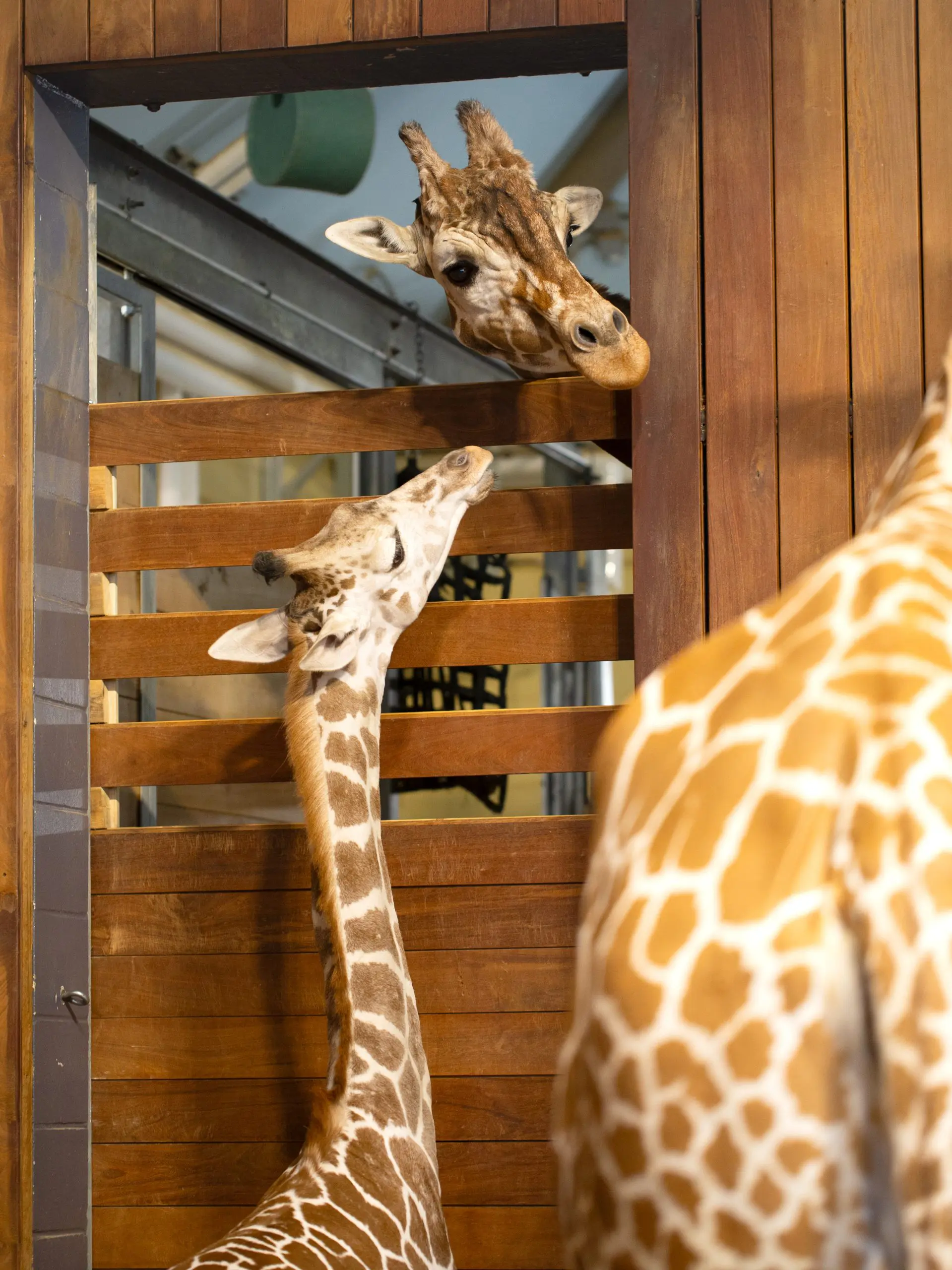
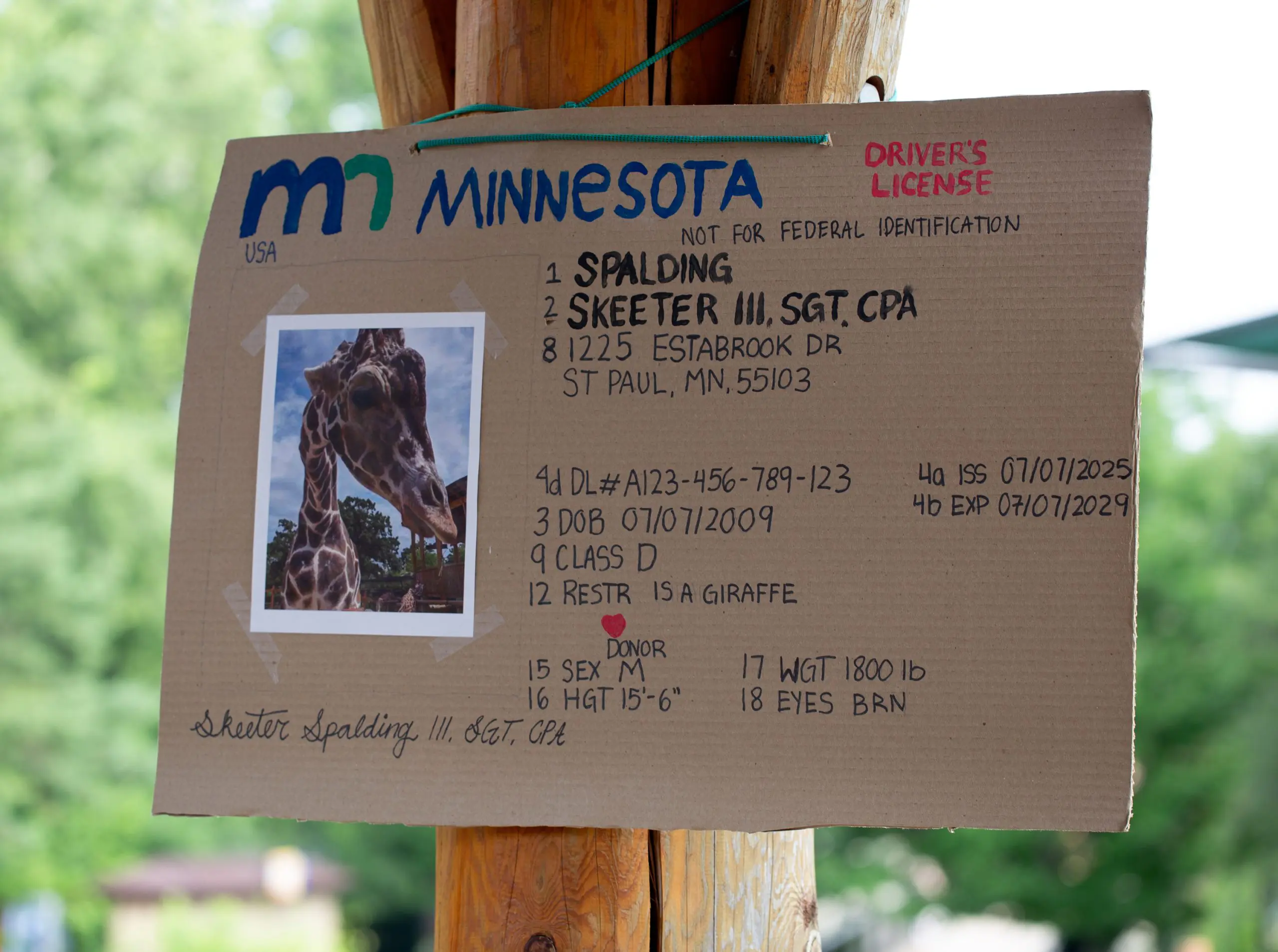
Just a year old when he arrived from the Jacksonville Zoo to Como in 2010, he was quickly rechristened at an all-staff luncheon with a full name long enough to match his size: Sgt. “Skeeter” Spaulding C.P.A. While the young male giraffe showed little aptitude for bookkeeping, he was a natural at breeding, siring eight calves, including six with Como’s late giraffe matriarch Daisy, with whom he had a special bond.
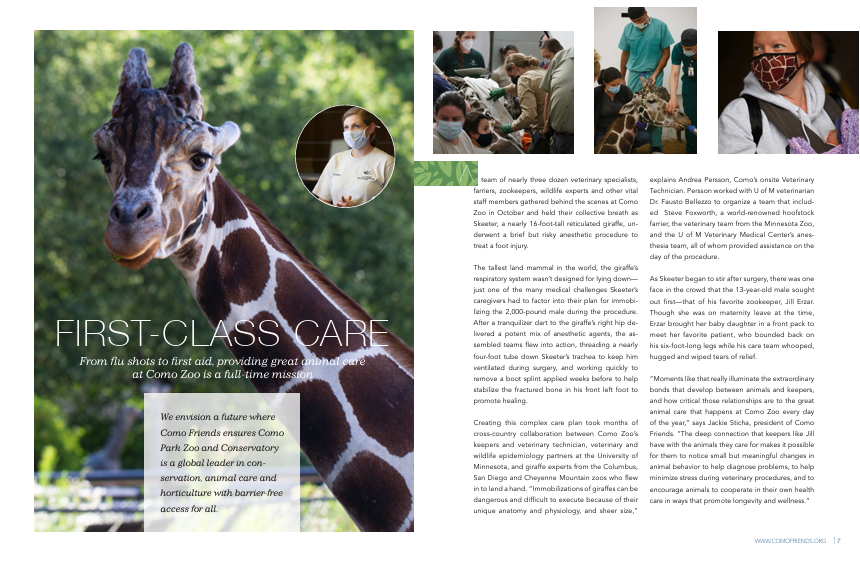
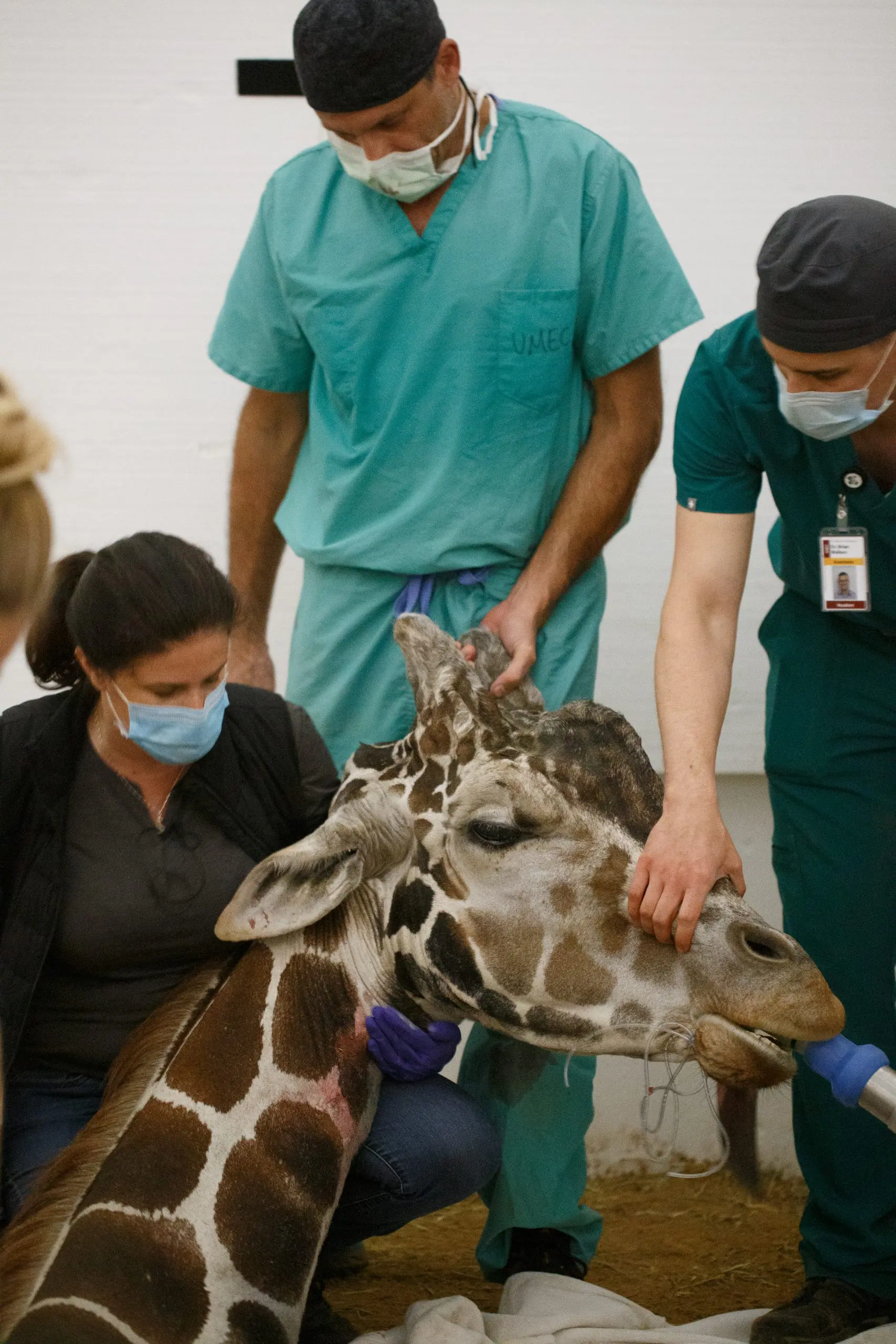
Skeeter’s health care made headlines in 2021, when the giraffe underwent a rare and high-risk surgical intervention to help repair a fractured front hoof. The procedure required the support of nearly three dozen veterinarians, anesthetists, farriers, zookeepers, wildlife experts and other support staff, many of whom flew in from partner zoos across the country to provide assistance. Immobilizing a 2,000 pound giraffe is a unique challenge, in part, because the giraffe’s respiratory system wasn’t designed for lying down. When Skeeter was successfully anesthetized, the assembled teams flew into action, threading a nearly eight-foot tube down his esophagus to keep him ventilated during surgery.
“That effort reflected the extraordinary commitment so many people have made to his care throughout his life,” says Como Park Zoo & Conservatory director Erica Prosser. “Skeeter has been part of our Como story, and we are grateful for the care and love that shaped his life here.”
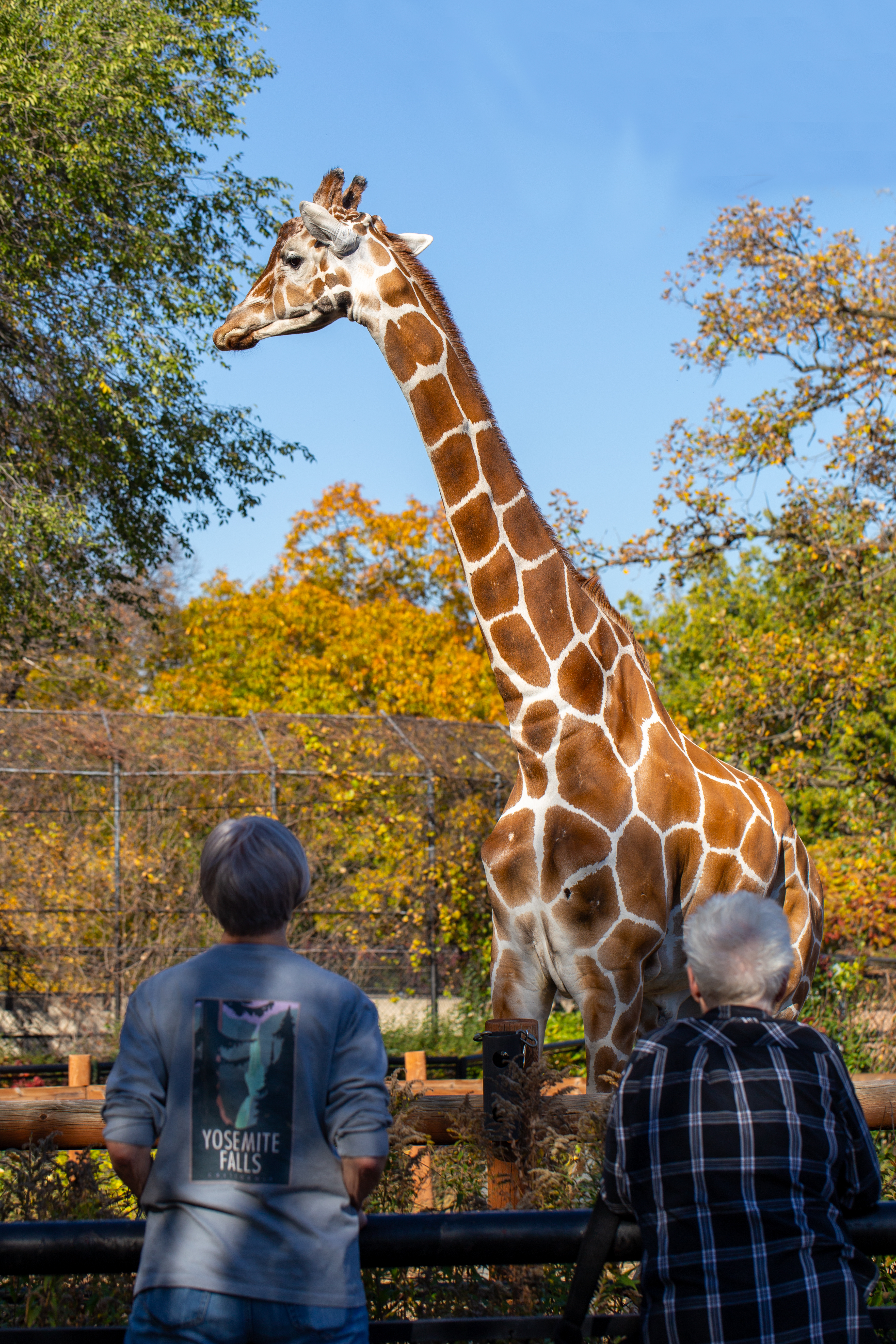
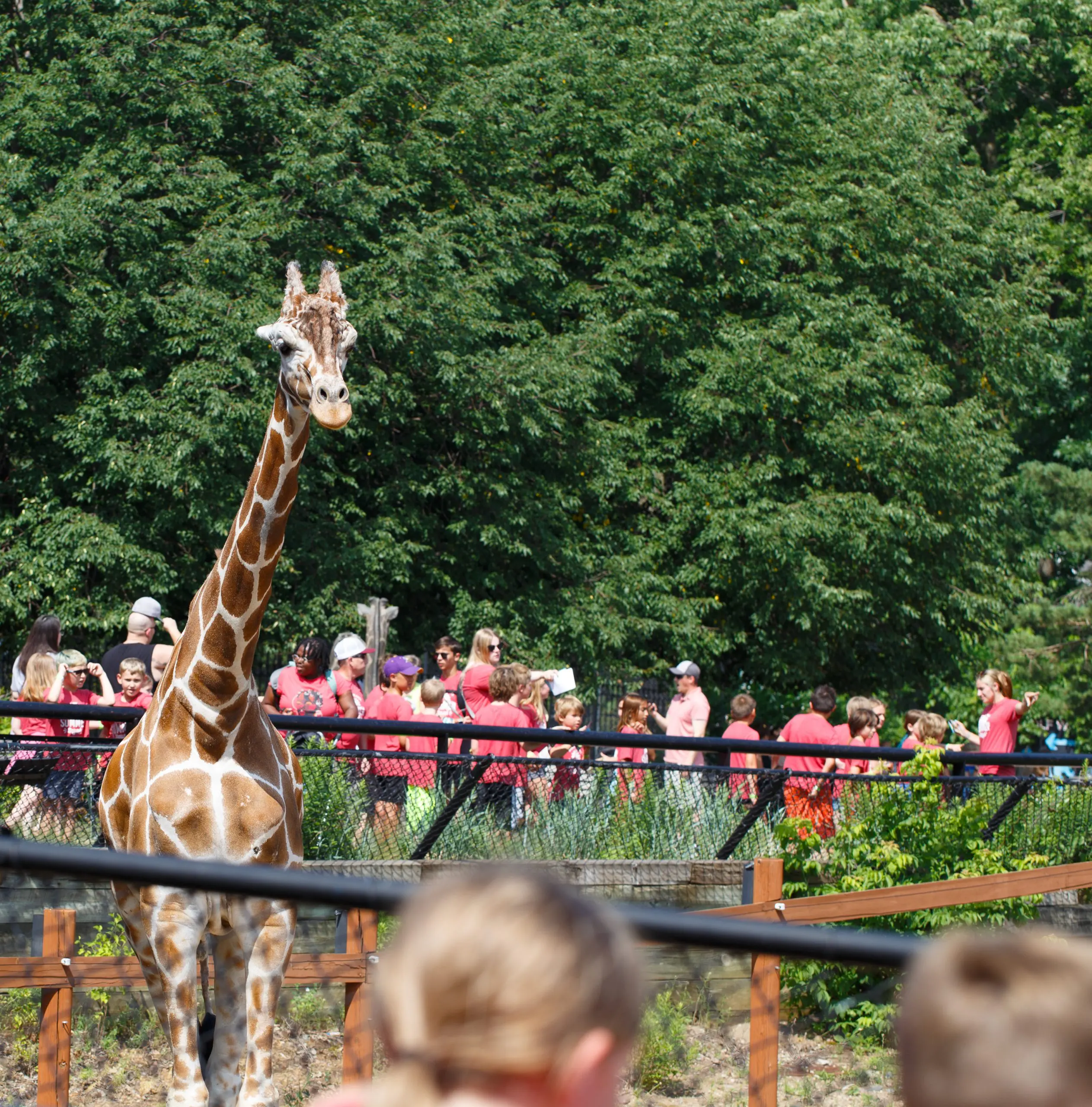
A New Understanding of a Complex Social Animal
While Skeeter’s health history tells an important story about the level of care that goes into the lives of every animal at Como Zoo, his tenure as an animal ambassador also coincided with an explosion in new research and understanding about what makes giraffes so special. While their iconic size and shape is ingrained in children’s picture books and wildlife documentaries, giraffes were generally overlooked by scientists until the early 2000s.
But with advances in genetic testing, digital photography, and long-range field data, researchers began to see many of their assumptions about giraffes were all wrong. For instance, in 2016, new research found that giraffes were actually four distinct species–Northern, Reticulated, Masai, and Southern–not the single species Carl Linnaeus originally classified in the 1700s. By 2021, a landmark review found that giraffes that were once considered “socially aloof” actually live in complex, matrilineal societies, with deep social bonds, and collaborative care of their young, similar to elephants and orcas.
“Everyone knows that giraffes are tall and beautiful, but there’s so much more to them,” says Erzar, who has contributed to this growing body of research through repeated trips to Africa, including an upcoming visit this fall. As part of Conservation Champions, the Como Friends program that allows Como’s professional staff to take part in conservation partnerships around the world, Erzar has made two trips to South Africa and Tanzania, supporting local conservation groups in promoting the environmental value of giraffes while protecting them from poachers. As part of the program, fellow hoofstock keeper Adam Nigon has also been to Namibia, assisting researchers in collecting giraffe herd survey data.
“These trips have helped us to tell the story of giraffes so much better, because I can say, for instance, the behavior visitors are seeing here at Como Zoo is the same behavior I’ve witnessed in the wild,” she says. “To see them moving in a herd or a family structure is really amazing, and it’s only increased my love for the animals I get to work with at Como.
“I’m grateful to have cared for Skeeter for the past decade,” she says. “He taught me so much about giraffes, and I feel honored that he trusted us with his care. I’ll miss my big guy more than I can say. His gentleness with children and the connections he helped people make will stay with us, along with the inspiration to do more for his species.”